Jordan Foster · 17 October 2026
Adapting Mist Delivery Mechanisms for Effective Pest Control in Greenhouse Environments Without Chemical Interventions
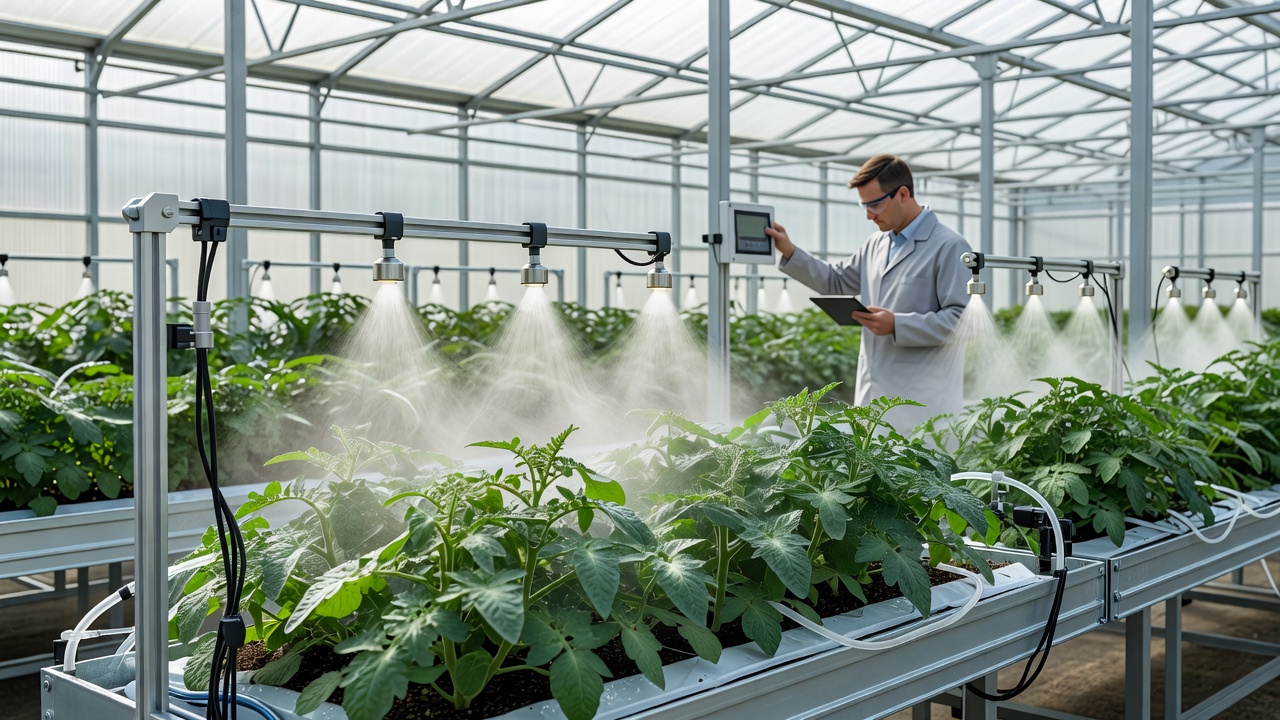
Greenhouse operators face ongoing pressures from pests such as aphids, whiteflies and spider mites that thrive in controlled environments, and adapting mist delivery mechanisms offers one pathway to address these issues through physical and biological means rather than synthetic compounds. Systems originally designed for irrigation or cooling undergo modifications including changes to nozzle configurations, droplet size calibration and application timing to target pest life stages directly or to create conditions unfavorable to infestations.
Core Principles of Non-Chemical Mist Adaptation
Traditional mist systems produce uniform droplets for humidity maintenance, yet effective pest control requires adjustments that alter surface tension, coverage density and particle velocity so water or biological suspensions reach hidden leaf undersides where many pests congregate. Data from agricultural trials indicate that reducing average droplet diameter from 150 microns to under 80 microns improves adhesion on waxy plant surfaces while minimizing runoff that can carry away beneficial microbes.
Mechanical Modifications to Nozzles and Delivery Lines
Engineers retrofit existing manifolds with pressure-regulated valves and specialized orifice plates that generate finer aerosols capable of penetrating dense canopies without saturating soil. In installations across European facilities, operators have documented a 30 percent increase in pest dislodgement rates after switching to multi-stage atomizers that cycle between high-velocity bursts and low-volume sustained flows. These changes allow the same infrastructure to serve dual purposes of climate control and pest suppression while keeping total water consumption within established limits set by regional water management authorities.
Researchers at institutions in Australia have examined how pulse-width modulation controls integrated into pump assemblies permit precise intervals that coincide with pest activity peaks, such as dawn emergence of thrips. The approach relies on timing rather than added substances, and results show reduced adult populations when mist events interrupt mating or egg-laying cycles.
Integration with Biological Agents and Cultural Practices
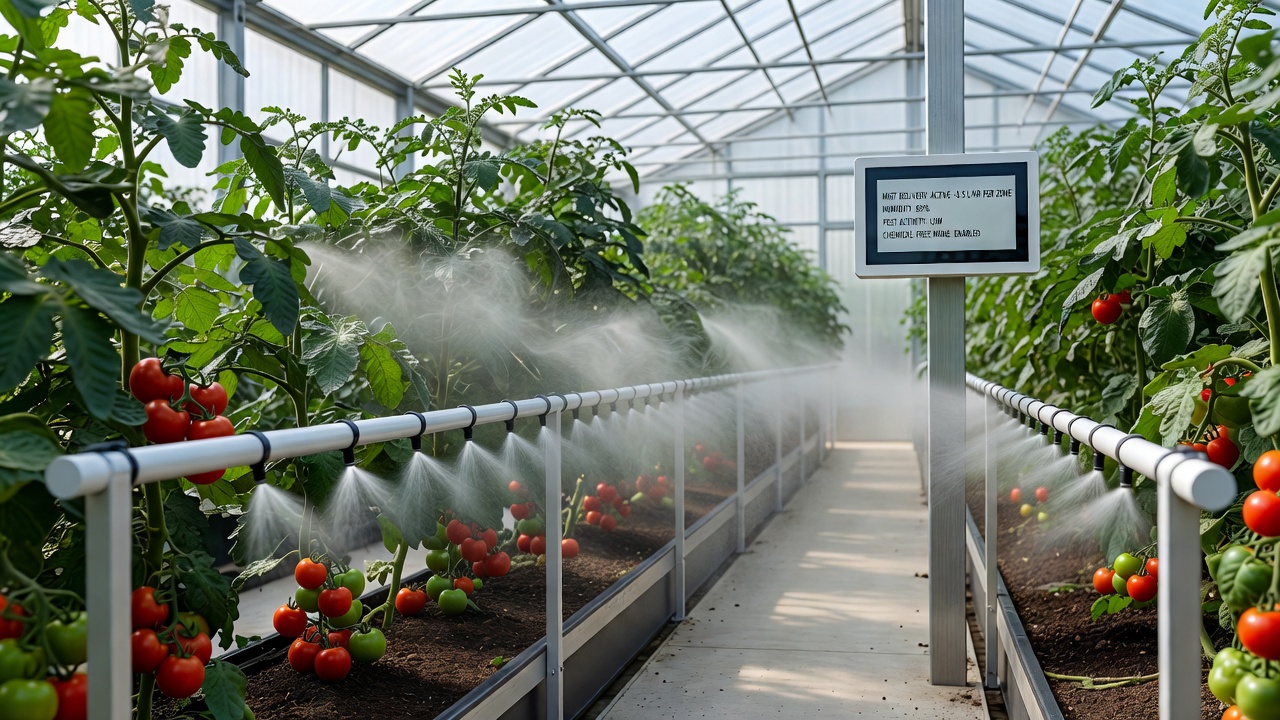
Mist mechanisms also function as carriers for living organisms including predatory mites and entomopathogenic fungi that require high relative humidity to establish on foliage. Canadian studies on greenhouse cucumbers report that delivering suspensions of Beauveria bassiana through adapted low-pressure lines achieved comparable suppression levels to conventional methods when humidity remained above 85 percent for four consecutive hours post-application. Operators adjust line filtration to prevent clogging by spores while maintaining droplet integrity that keeps the agents viable during transit.
What's notable is the pairing of mist adaptations with sanitation routines such as removing crop debris between cycles, which prevents pest reservoirs from re-establishing. In one documented case at a North American research greenhouse, combining weekly mist applications with thorough floor cleaning reduced whitefly counts by more than half over a single growing season without introducing any pesticide residues.
Operational Considerations Across Different Climates
Facilities in arid regions adapt mist schedules to nighttime hours when evaporation rates drop, allowing droplets to linger longer on plant surfaces and increase the chance of physical removal or microbial infection of pests. Conversely, operations in humid zones shorten burst durations and increase intervals to avoid excess moisture that could encourage secondary fungal issues unrelated to the target pests. Figures from monitoring programs coordinated by the Food and Agriculture Organization reveal that these region-specific timing adjustments correlate with sustained yield stability in crops ranging from ornamentals to leafy greens.
Maintenance protocols emphasize regular inspection of seals and calibration of flow meters to ensure consistent performance, because even minor blockages alter droplet spectra and reduce efficacy against mobile pests. Training programs for greenhouse staff now include modules on recognizing when nozzle wear begins to shift particle distribution outside the optimal range for pest contact.
Conclusion
Adapting mist delivery mechanisms expands the toolkit available for greenhouse pest management by leveraging existing infrastructure for non-chemical interventions that rely on physical disruption, humidity manipulation and biological delivery. Continued refinement of nozzle technology and application protocols, supported by data from diverse geographic sources, continues to shape how these systems contribute to integrated approaches that protect crop health while meeting regulatory expectations for residue-free production.