Zoe Frank · 19 September 2026
Precision Control of Droplet Formation Rates in High-Traffic Public Transit Hubs
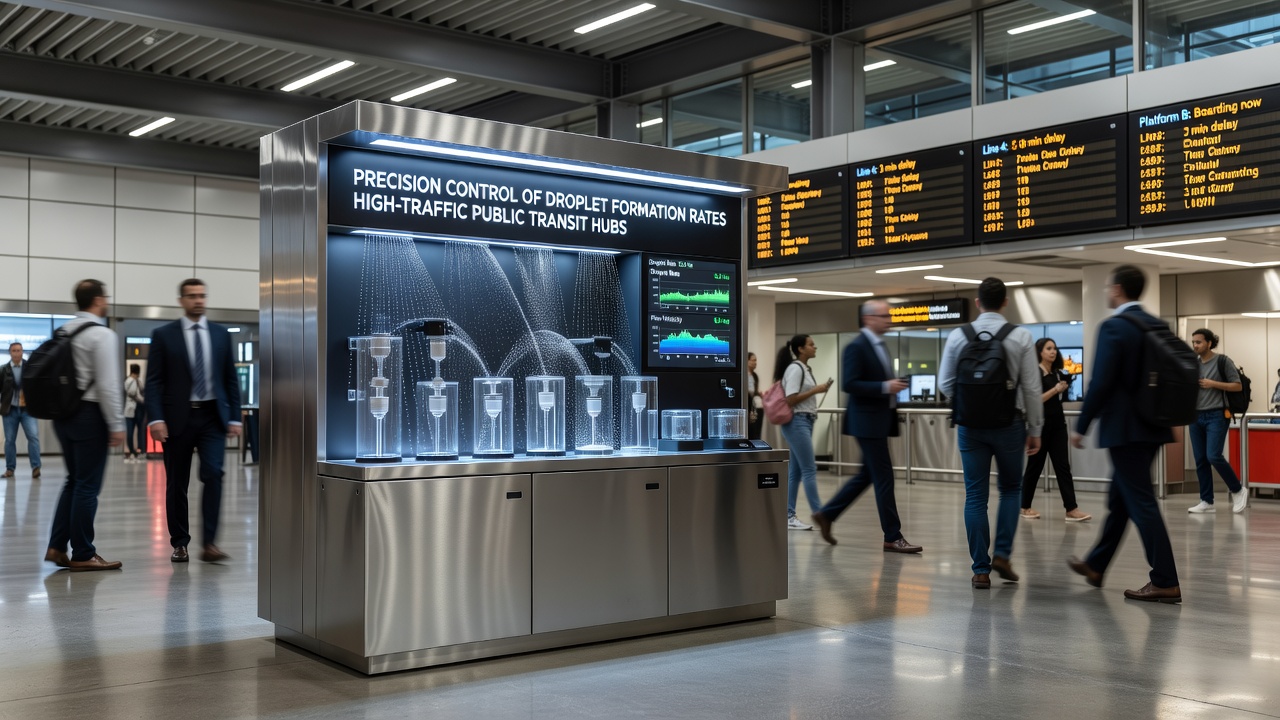
High-traffic public transit hubs rely on precise systems that regulate droplet formation rates to maintain air quality, support cooling processes, and assist with surface disinfection across platforms, concourses, and waiting areas, where thousands of passengers move through each hour. Engineers design these setups around adjustable nozzles, pressure regulators, and real-time monitoring units that adjust output based on passenger density, humidity levels, and air flow patterns recorded by integrated sensors.
Core Mechanisms Driving Droplet Regulation
Systems achieve control through piezoelectric actuators and variable-orifice nozzles that produce droplets sized between 10 and 50 micrometers, while flow meters track volume per minute to prevent oversaturation or insufficient coverage. Research indicates that maintaining consistent rates requires feedback loops connecting occupancy data from gate sensors with pump speeds, so output rises automatically during morning and evening rush periods yet drops during overnight maintenance windows. Observers note that transit operators in major cities calibrate these parameters daily using historical traffic logs combined with live environmental readings.
Implementation Across Different Hub Types
Airport terminals apply droplet systems along security lines and baggage claim zones to reduce airborne particulates, whereas subway stations position units near escalators and platform edges where ventilation already moves large air volumes. Data from the European Centre for Disease Prevention and Control shows that hubs adopting calibrated misting report measurable reductions in surface microbial counts after scheduled cycles. Engineers integrate these units with existing HVAC infrastructure, which allows droplet trajectories to follow natural air currents rather than fighting against them.
Calibration routines involve mapping each zone for air velocity and temperature gradients so nozzles activate in staggered sequences, creating overlapping coverage zones without localized pooling on floors. Those who manage such installations emphasize that droplet size distribution stays within narrow tolerances because larger particles fall quickly while finer ones remain suspended longer, affecting both efficacy and passenger comfort.
Operational Data and Monitoring Practices
Transit authorities collect continuous readings on droplet concentration, evaporation rates, and residual moisture levels through arrays of optical sensors placed at multiple heights. Figures reveal that systems in European and North American hubs typically operate at 0.5 to 2.0 liters per hour per nozzle during peak times, with adjustments made automatically when ambient humidity exceeds set thresholds. In September 2026, updated performance benchmarks issued by Transport Canada took effect for major Canadian terminals, requiring documented verification of droplet uniformity across all active zones every 48 hours.
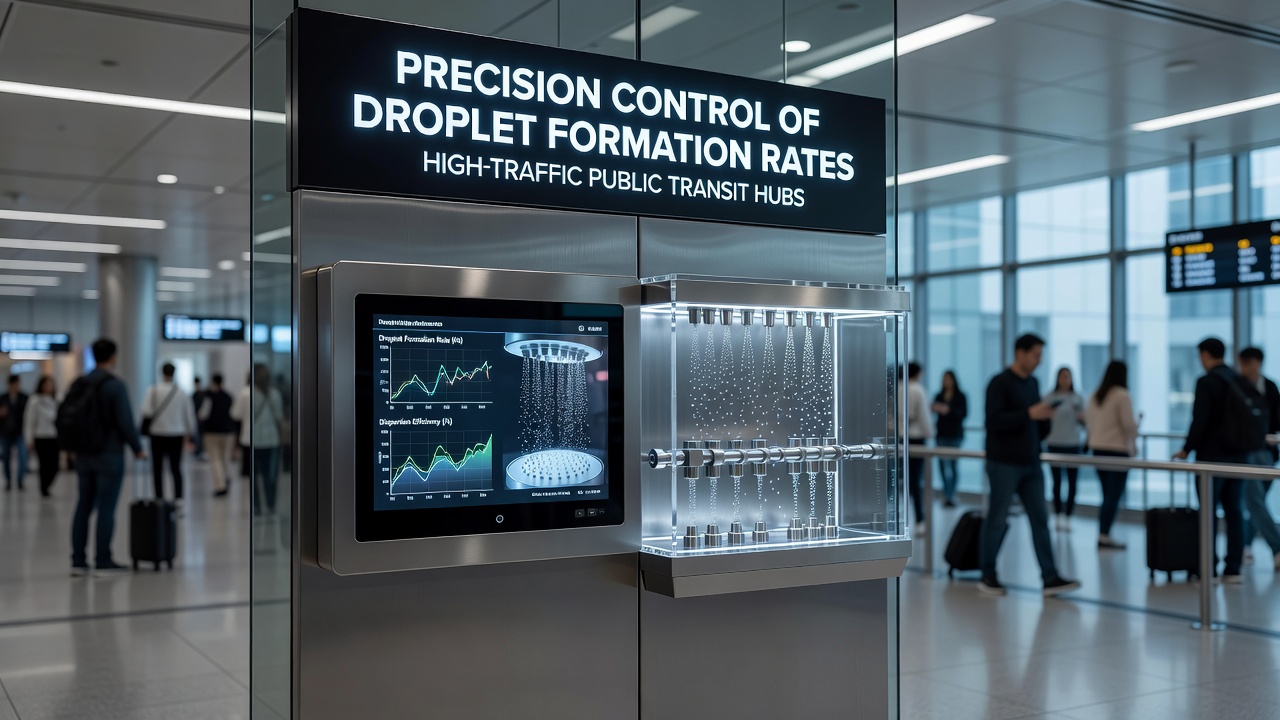
Maintenance teams perform weekly checks on nozzle wear and pressure calibration because even minor erosion shifts droplet spectra outside target ranges. Studies from university engineering departments document that hubs using predictive maintenance models experience fewer unplanned shutdowns than those relying on fixed schedules. Real-time dashboards display aggregated metrics across entire facilities, allowing supervisors to spot anomalies such as clogged orifices or pump drift before they affect overall performance.
Integration with Broader Facility Systems
Droplet control networks connect to broader building management platforms that coordinate lighting, ventilation, and passenger flow information. This linkage enables operators to preemptively increase mist output in zones where sensors detect higher carbon dioxide levels from crowding. Reports from the Australian Department of Infrastructure, Transport, Regional Development, Communications and the Arts indicate that coordinated systems in Sydney and Melbourne stations achieve stable droplet delivery even when external weather conditions change rapidly. Power consumption stays modest because pumps run at variable frequencies matched to demand rather than continuous maximum output.
Training programs for facility staff cover interpretation of sensor alerts and manual override procedures during equipment faults. Documentation kept on site records every adjustment, creating audit trails that regulatory bodies review during compliance inspections. Those managing large installations find that modular designs simplify upgrades when newer nozzle technology becomes available, since individual units can be swapped without shutting down entire zones.
Conclusion
Precision control of droplet formation rates continues to evolve through sensor refinement, better nozzle materials, and tighter integration with transit operations data. Facilities that maintain rigorous calibration and monitoring protocols sustain reliable performance across varying passenger loads and seasonal conditions. Ongoing research supports incremental improvements in measurement accuracy and energy efficiency, while regulatory updates such as those implemented in September 2026 set clearer expectations for verification and reporting. Transit hubs worldwide adopt these approaches to support cleaner, more consistent environments for daily commuters and travelers alike.