Ben Becker · 5 September 2026
The Influence of Environmental Sensors on Automated Mist Dispersion Patterns in Variable Climate Conditions
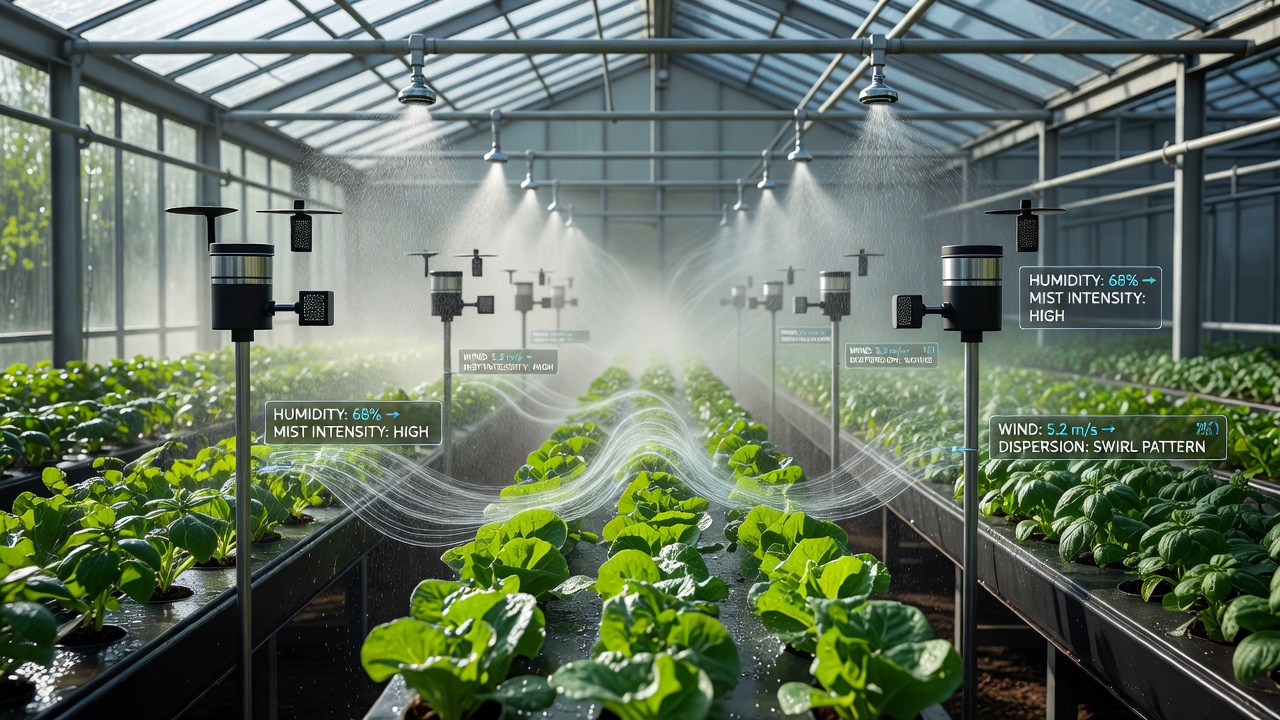
Environmental sensors play a central role in shaping how automated mist dispersion systems respond to changing weather patterns, and data from multiple field studies shows that real-time inputs from temperature, humidity, wind speed, and atmospheric pressure devices directly adjust nozzle output, droplet size, and spray trajectory. Systems equipped with these sensors maintain consistent coverage across agricultural fields, industrial cooling zones, and urban green spaces even when conditions shift rapidly throughout the day. Researchers tracking performance across several continents note that sensor-driven adjustments reduce water waste while preserving the intended dispersion radius, particularly during periods of high variability such as seasonal transitions.
Sensor Integration and System Response Mechanisms
Modern automated mist units rely on networks of calibrated sensors that feed continuous streams of environmental data into central controllers, and these controllers recalculate dispersion parameters several times per minute to match current conditions. Temperature sensors trigger increases in mist volume when ambient heat rises above set thresholds, whereas humidity monitors scale back output to prevent over-saturation in already moist air. Wind sensors measure both speed and direction, prompting actuators to alter nozzle angles and maintain even coverage downwind, while pressure sensors detect atmospheric changes that influence droplet evaporation rates. Studies conducted by university research teams indicate that such integrated loops produce measurable improvements in uniformity compared with static timer-based systems.
Performance Across Variable Climate Zones
In arid regions with large daily temperature swings, sensor arrays enable mist systems to ramp up output during peak afternoon heat and reduce it sharply after sunset, a pattern documented in long-term monitoring projects. Coastal areas present different challenges because salt-laden breezes accelerate corrosion and alter droplet behavior, yet sensor-equipped units equipped with corrosion-resistant housings and adaptive algorithms continue to deliver predictable coverage. Temperate zones with frequent frontal passages see rapid shifts in barometric pressure that affect evaporation, and the same sensor networks compensate by modulating mist density accordingly. Observers tracking deployments in multiple climate classifications report that the technology maintains target moisture levels with fewer manual interventions than older fixed-rate equipment.
Data Patterns Observed in 2026 Deployments
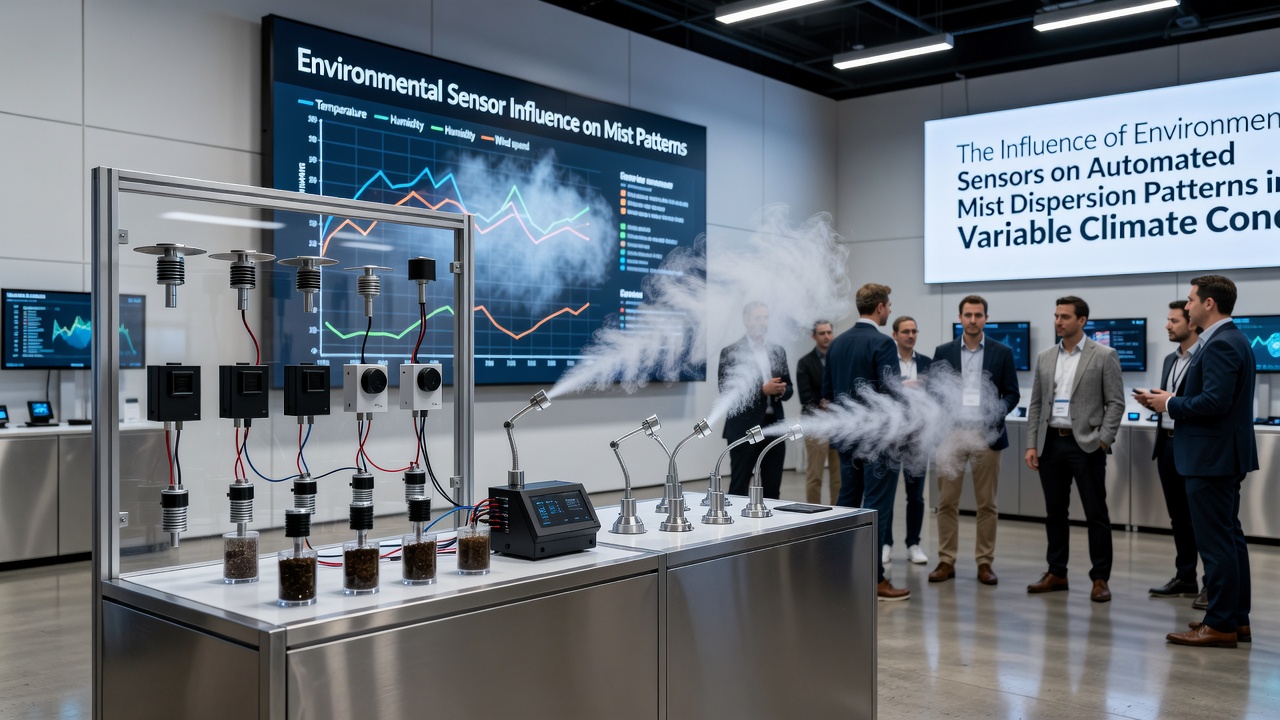
By September 2026, expanded sensor grids installed across test sites in North America and Europe had accumulated enough longitudinal data to reveal clear correlations between specific environmental variables and resulting mist plume shapes. Wind gust frequency emerged as a stronger predictor of lateral drift than average wind speed alone, prompting engineers to refine directional correction routines. Humidity spikes following rainfall events produced temporary reductions in effective droplet travel distance, a relationship quantified through high-resolution imaging and particle analysis. Those reviewing the aggregated datasets note that the refinements translated into lower overall resource consumption without compromising the functional goals of each installation.
Calibration Standards and Maintenance Protocols
Accurate sensor performance depends on regular calibration schedules established by equipment manufacturers and verified through independent testing laboratories, and protocols typically include quarterly checks against reference instruments plus annual full-system audits. Field technicians document drift in sensor readings caused by dust accumulation or temperature extremes, then apply corrective offsets before resuming automated operation. Organizations following these procedures report fewer unplanned shutdowns and more consistent dispersion outcomes across seasons. Data collected from maintenance logs shows that sites adhering to manufacturer-recommended intervals experience sensor accuracy retention above 95 percent over multi-year periods.
Applications in Agriculture and Industrial Settings
Agricultural operations use sensor-guided mist systems to deliver precise irrigation and foliar treatments while minimizing runoff, and vineyard managers in regions with pronounced diurnal temperature changes have documented improved grape quality metrics after adopting the technology. Industrial facilities employ the same sensor arrays to control airborne particulate matter around processing areas, where variable wind patterns previously caused uneven suppression. Research institutions monitoring both sectors have compiled comparative datasets showing that adaptive mist dispersion reduces total water and additive volumes by measurable percentages relative to non-sensor baselines. These findings appear in peer-reviewed journals focused on environmental engineering and precision agriculture.
Future Sensor Developments and Integration Trends
Emerging multi-parameter sensors combine several measurement functions into single compact units, reducing installation complexity while increasing data density available to control algorithms. Wireless mesh networks now transmit readings from remote field locations with minimal latency, enabling centralized oversight of dispersed mist arrays. Pilot programs testing machine-learning overlays on raw sensor streams demonstrate faster adaptation to unusual weather events such as sudden microbursts or prolonged high-humidity periods. Industry reports compiled by research consortia across Australia and Canada project continued expansion of these capabilities through the remainder of the decade.
Conclusion
Environmental sensors have become integral components that allow automated mist dispersion systems to maintain effective performance across fluctuating climate conditions, and the documented outcomes from multiple independent studies support their continued adoption. Ongoing refinements in sensor accuracy, data transmission, and control logic point toward further gains in precision and efficiency as deployment scales increase. The patterns established through systematic monitoring provide a factual basis for evaluating system performance in any given location and climate profile.